
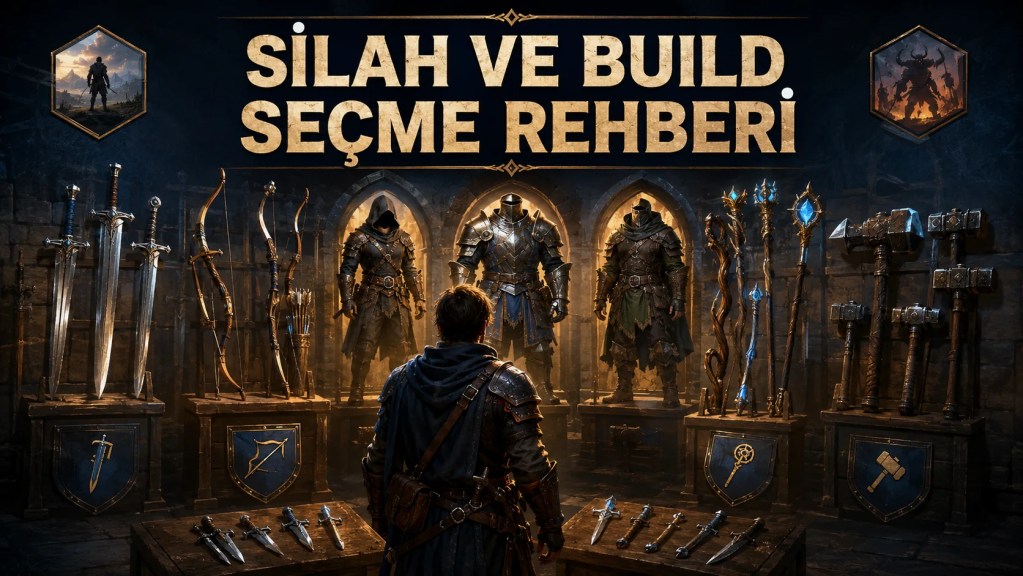
Albion Online has no fixed classes; your equipment is your class. That freedom is one of the game’s biggest strengths, but it can overwhelm new players. Instead of asking “what is the strongest set?”, start with a better question: “what content am I trying to play?”
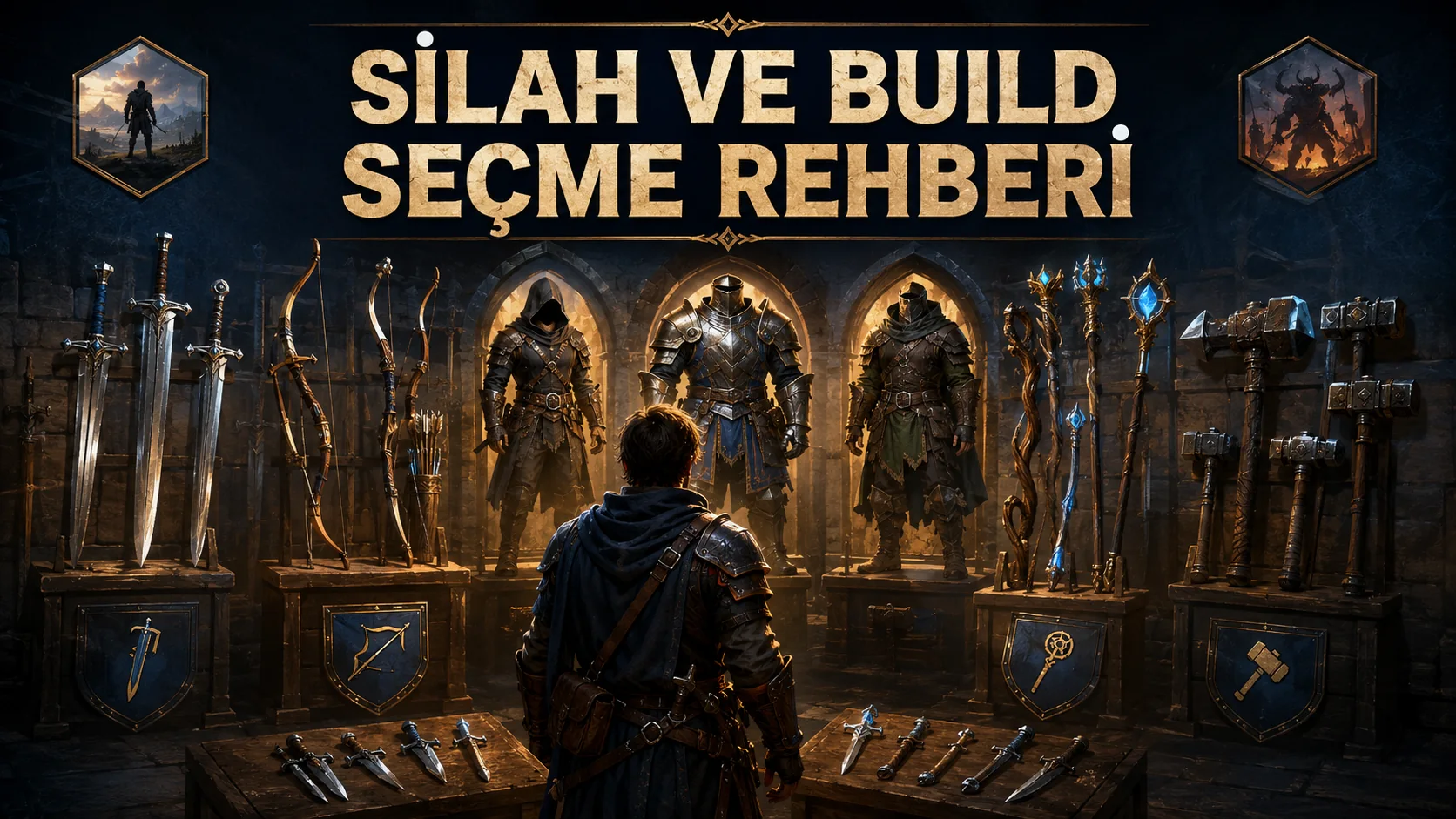
Start with content, not with a weapon
The same weapon can use completely different equipment depending on the activity. Mobility and one-versus-one matchups matter in Mists; coordination and target control matter more in small-scale; ZvZ demands role discipline and composition; PvE often rewards sustain, area damage and consistent uptime.
Answer four questions first:
- Am I playing solo, duo or group content?
- Is the goal PvE, PvP or a mixture?
- How many times can I replace this set in full-loot content?
- Is my role damage, tank, healer, support, gank or escape?
Five things to evaluate when choosing a weapon
1. Damage or primary job
For DPS, theoretical damage is not enough—can you actually apply it? For healers, casting safety and positioning matter as much as raw healing. For tanks, engage and control are as important as durability.
2. Mobility
A large part of Albion combat is distance management. You may need to catch, reset, escape a cooldown window or reach an exit. If the weapon lacks mobility, another slot may have to compensate.
3. Sustain
Long fights test health, energy and cooldown cycles. Sustain improves PvE uptime and can keep a PvP build functional after the first exchange.
4. Matchup dependence
Some weapons are excellent into certain opponents and uncomfortable into others. Track your own deaths and identify recurring bad matchups instead of treating a tier list as universal truth.
5. Economic sustainability
The fastest way to learn a build is to play it repeatedly. If you are afraid to lose the set, you will take fewer fights and learn more slowly. Keep full-loot gear at a level your bankroll can replace.
How to think about cloth, leather and plate
These armor families have broad offensive and defensive tendencies, but choosing by material alone is a mistake. The active ability on the chest piece often changes the build more than the armor label itself.
- Cloth: often supports aggressive or caster-oriented setups and powerful active abilities.
- Leather: flexible middle-ground options that appear in many solo and small-scale builds.
- Plate: frequently used for durability, control and team roles, while some individual pieces still appear in aggressive setups.
The same principle applies to helmets and shoes. Albion is not a “cloth helmet means mage” game; ability synergy matters more than traditional class stereotypes.
Give every equipment slot a job
- Helmet: cleanse, purge, defense, energy, silence or burst setup.
- Chest: primary damage/healing amplification, sustain, invisibility, reflect or durability.
- Shoes: chase, escape, repositioning or sustained sprint.
- Cape: energy, burst, defense or a passive trigger supporting a specific fight window.
- Food and potion: fix the build’s weak point or amplify its main strength.
If every slot only adds damage, the build can become fragile. Strong builds usually combine pressure with a way to survive, reposition or reset.
Solo-content checklist
- Do you have a reliable way to close or create distance?
- Do you have a defensive cooldown for the opponent’s burst window?
- Does the build run out of health or energy in long fights?
- Can you adapt to purge/cleanse matchups with a skill or item change?
- Can you immediately buy the same set again after a death?
For solo players, knowing which fight to refuse is part of the build. Mobility, inspection habits and economic discipline can matter more than a few hundred extra Item Power.
Why group builds are different
In group content, your job inside the composition matters more than the strongest individual item. Two players bringing the same utility may be wasteful while a team with no cleanse or no defensive answer can have a major weakness. Tank, healer and DPS cooldowns need to work together.
If your guild provides a standard build, changing one piece can affect the entire composition. Understand what the item contributes before replacing it.
What changes in IP-capped content?
Some PvP activities cap or reduce the benefit of high Item Power. In those environments, buying a much more expensive set may not provide proportional power. Specialization, abilities, matchup knowledge and cooldown execution become even more important.
How to use meta builds properly
AlbionTR Meta Builds combines observed PvP loadouts with content-focused build libraries. Read the data in three steps:
- Identify the role of the weapon and chest piece.
- Ask which problem each helmet, shoe and cape solves.
- Adapt utility pieces to your budget and content without destroying the core synergy.
Popularity does not automatically mean “best for you.” Usage can be driven by accessibility, team compositions or a specific patch environment.
A simple decision tree
Solo PvE: comfortable clear + sustain + low replacement cost.
Mists / solo PvP: mobility + defensive window + matchup plan.
Gank: catch + dismount pressure + target follow-up.
Small scale: burst window + defensives + team utility.
ZvZ: shotcaller-approved standard build + timing and discipline.
Conclusion
A useful build formula is Content → Role → Main weapon → Survival plan → Mobility → Economy. Follow that order and you will understand why a build works instead of copying a random meta set. Then play it long enough to build Destiny Board specialization.
For progression planning, read the Destiny Board Guide; for current observed loadouts, use Meta Builds.
Source: Albion Online Wiki – Item Power